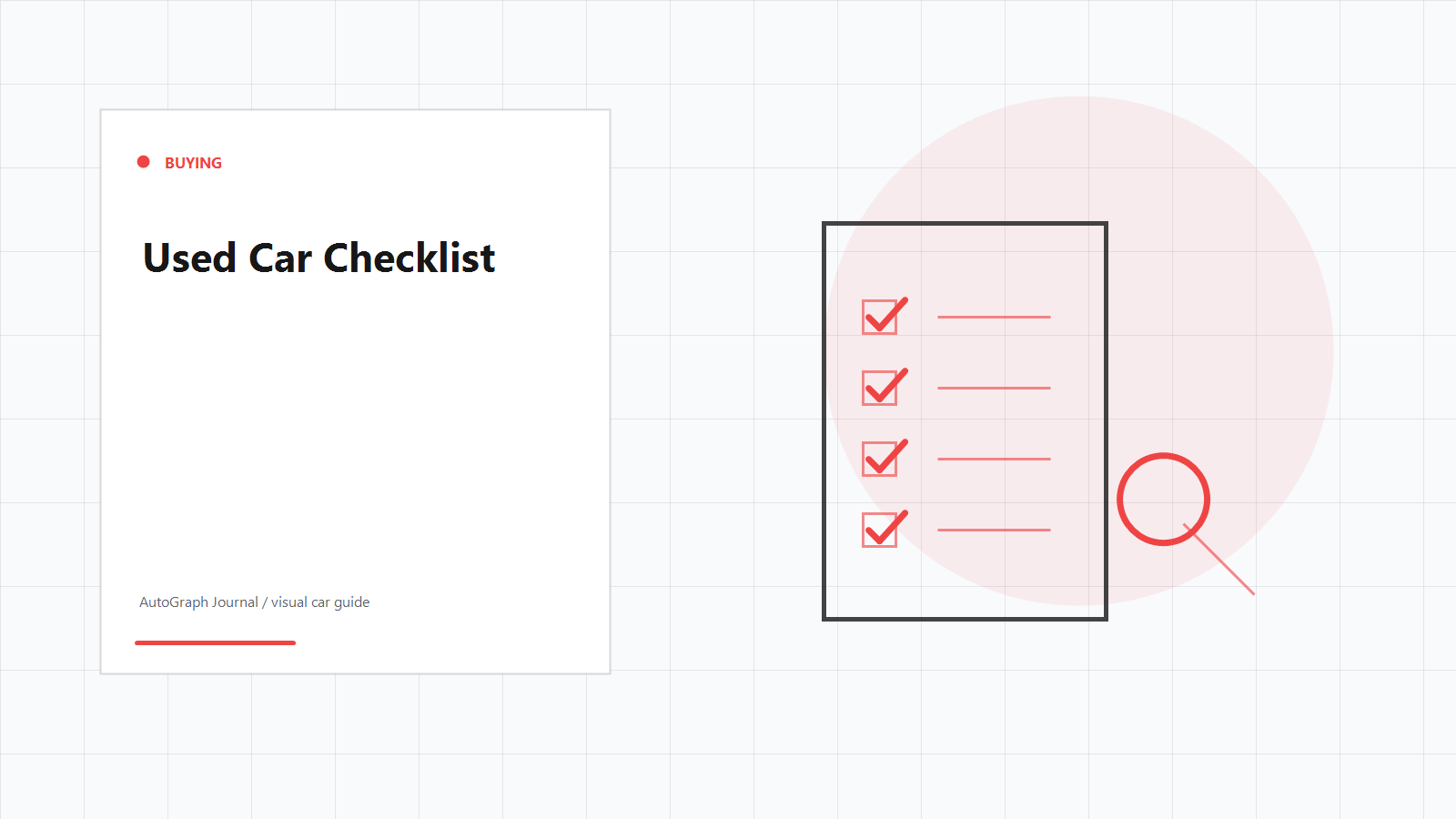
A good used car purchase comes from reducing uncertainty. The listing photo may create interest, but the checklist decides whether the car deserves more attention.
Think of the inspection as five zones: paperwork, exterior, interior, mechanical condition, and test drive.
Start With Documents
Before inspecting paint or seats, check the title, VIN, service history, ownership record, recall status, and mileage consistency.
A clean history does not guarantee a perfect car, but missing records should change how much risk you are willing to accept.
Exterior Clues Matter
Look for uneven panel gaps, mismatched paint, overspray, cracked lights, old tires, and windshield damage. These details can point to accident repairs, deferred maintenance, or upcoming costs.
The goal is not to reject every imperfect car. The goal is to price the condition accurately.
Interior Wear Tells a Story
Seat bolsters, pedals, steering wheel texture, buttons, carpets, and cargo areas reveal how the car was used. Heavy wear at low mileage deserves questions.
Also test every basic function: windows, locks, climate controls, screens, mirrors, lights, and charging ports.
The Test Drive Should Be Structured
Drive at low speed, highway speed, over bumps, while braking, while turning, and while parking. Listen for clunks, vibration, delayed shifts, brake pulsation, and steering pull.
If something feels wrong, write it down before negotiation changes the mood.