Modern car safety is a layered system. Some features protect during a crash, some help avoid a crash, and others warn the driver before risk becomes urgent.
The clearest way to understand these systems is to map where they act around the vehicle.
Passive Safety Protects During Impact
Airbags, seatbelts, crumple zones, head restraints, and strong passenger cells are passive safety systems. They matter when a crash cannot be avoided.
Crash-test ratings help, but the details behind the rating also matter: overlap protection, side impact performance, and occupant protection.
Active Safety Helps the Driver Avoid Risk
ABS, traction control, and stability control help the driver maintain control during braking, acceleration, or sudden steering.
These systems are foundational. They are less visible than large screens, but they are often more important.
ADAS Uses Cameras and Radar
Modern driver assistance can include lane warnings, lane centering, blind-spot monitoring, adaptive cruise control, rear cross-traffic alerts, and automatic emergency braking.
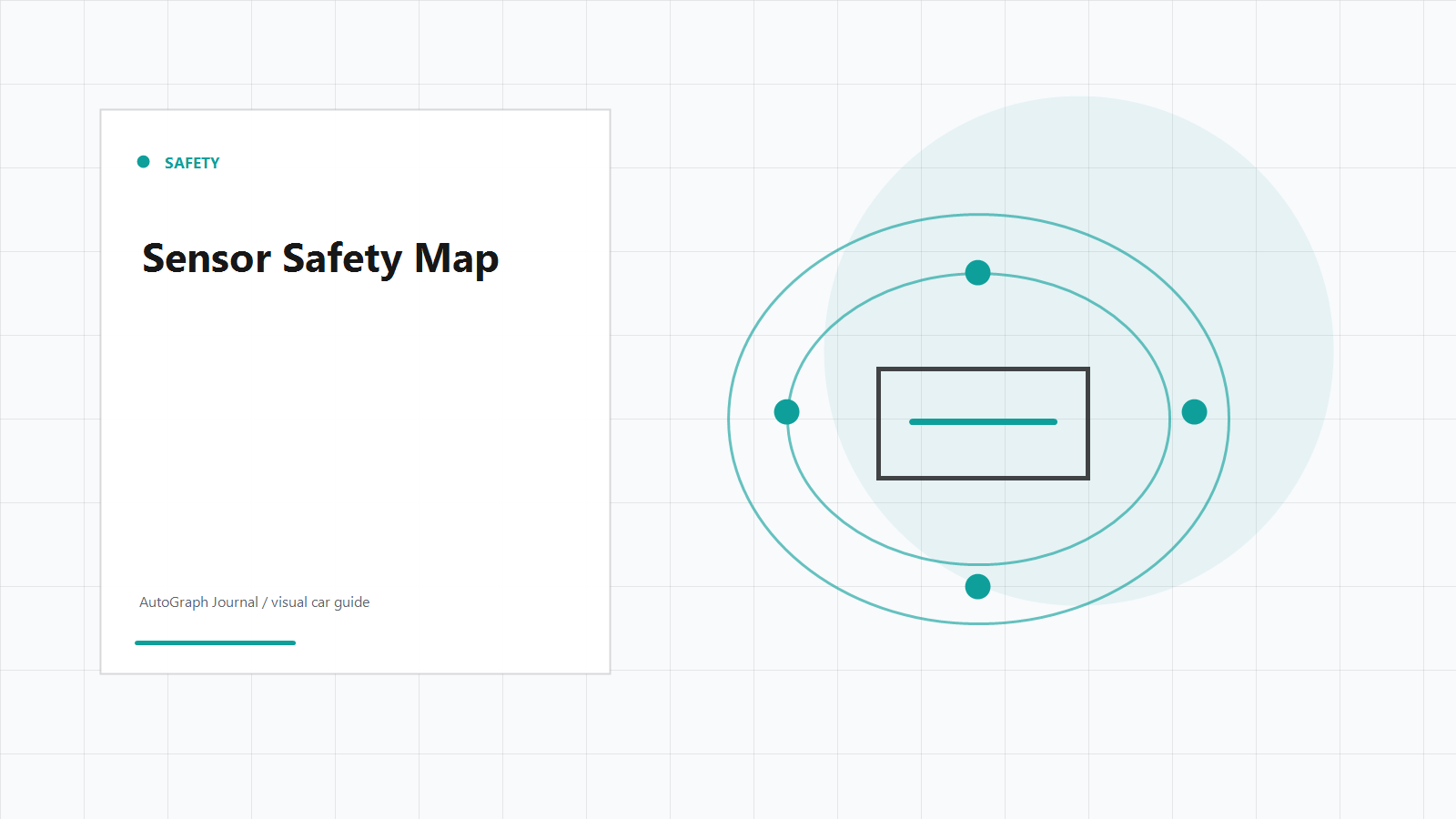
The sensor map matters because cameras, radar, and ultrasonic sensors have different strengths and blind spots.
Limitations Should Be Shown Clearly
Weather, dirty sensors, faded lane markings, sharp curves, glare, and unusual obstacles can reduce system performance.
A good safety infographic explains both what a feature does and when the driver must not rely on it.