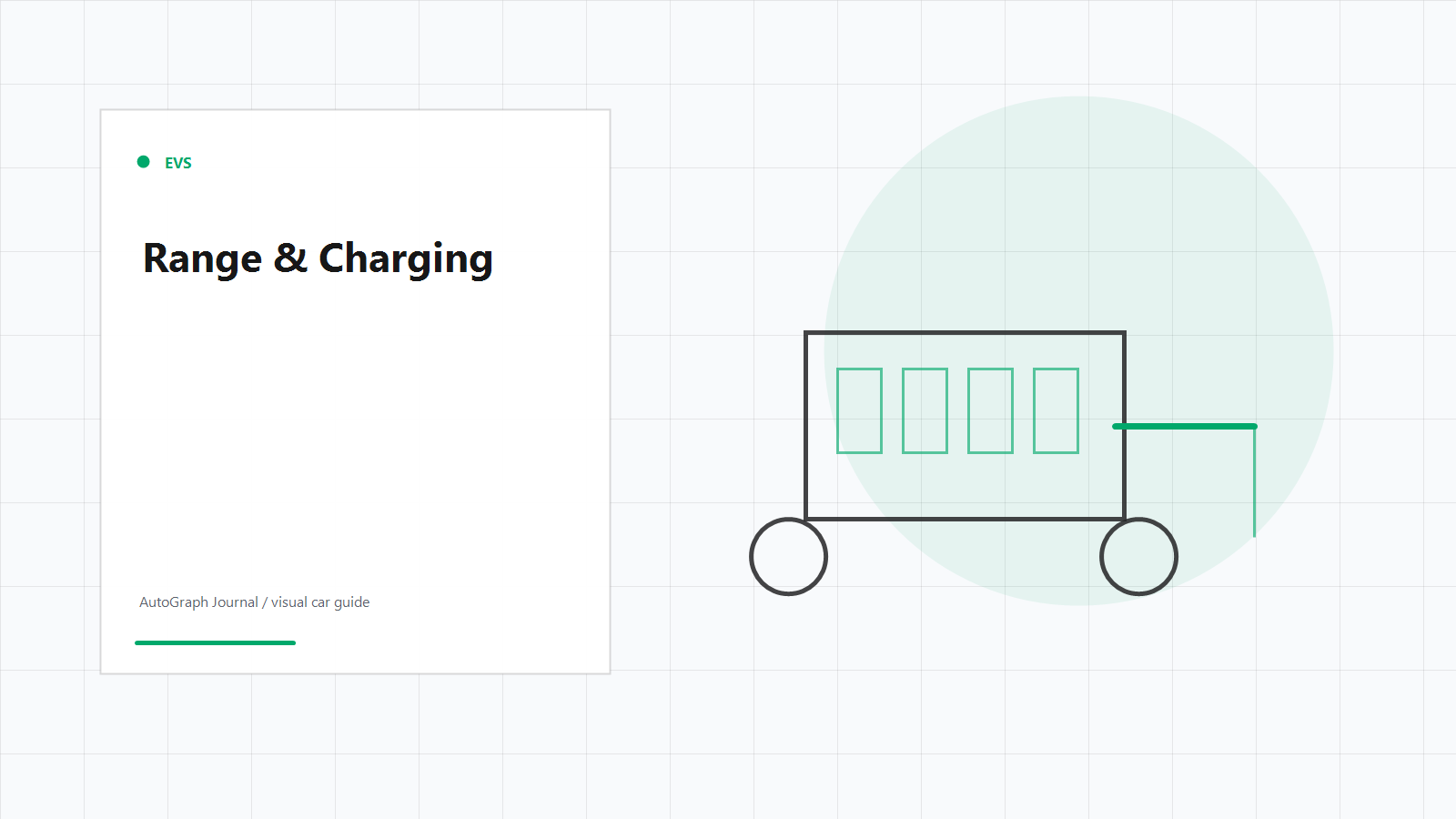
Electric car range is not a single number. It changes with speed, weather, tire choice, route, cabin heating, and how much of the battery you normally use.
The easiest way to understand EV ownership is to map the charging routine instead of memorizing the headline range.
Daily Range Is the Real Metric
For most drivers, daily range matters more than maximum range. A car that covers normal weekday driving and charges overnight can feel easier to own than a longer-range car with poor charging access.
Start with your actual mileage. Then compare it with home charging speed, winter range loss, and the distance to reliable public chargers.
Charger Speed Is a Curve
Fast charging is not constant. Many EVs charge quickly at low battery levels and slow down as the battery fills. That is why a 10 to 80 percent charging time is often more useful than a 0 to 100 percent claim.
For road trips, the best strategy is usually shorter charging stops inside the fast part of the curve.
Home Charging Changes the Ownership Rhythm
Home charging turns refueling into a background task. Even a modest charger can cover many commutes if the car sits plugged in overnight.
Apartment drivers and street-parked owners should map public charging before buying. The best EV is the one that fits the real charging pattern.
Weather and Speed Matter
Cold weather, high highway speeds, roof racks, and heavy loads all reduce range. A good infographic should separate ideal range from practical range so the owner understands the buffer.
Range confidence comes from planning with realistic numbers.